


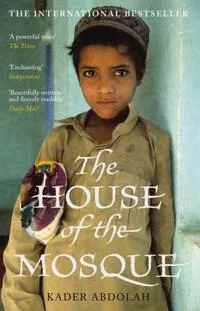
You might think all of the classic Dutch novels are set during the Second World War, or maybe during the Golden Age, but The House of the Mosque starts in 1969 and isn’t even set in the Netherlands. Considered one of the best works of fiction in the Netherlands, the book follows an Iranian family through the revolution and, especially given the current state of the world, is a timeless read.
In the fictional town of Senejan, 300 kilometers northwest of Tehran, there sits an 800-year-old, 36-room house next to the city’s mosque.
For generations, the family of Aqa Jaan has lived in that house and provided the imams for the religious order. His wife, children, cousins, and various servants call the residence home.
The story opens in July 1969, with the family’s first television set, brought in so Aqa Jaan can watch the moon landing. The family’s story continues through the 1979 revolution; the rule of the first supreme leader of Iran; Ruhollah Khomeini and ends just after Khomeini’s death in 1989.
Aqa Jaan and his family grapple first with the modernisation and Westernisation of Iran, and then the revolution and the rise of religious conservatism. The family is caught between traditionalists, who support the revolution and the modernists, who are opposed to religious fervour and rising authoritarianism.
Despite the rapid changes outside the house walls, family life goes on. Children are born, marriages are held, business transitions take place. Aqa Jaan must protect his loved ones from revolutionary guards but also cheating spouses, gossiping neighbours and domestic squabbles.
The work blends history and fiction, interwoven with poetry, religious texts and traditional fables. At one point, Aqa Jaan finds an especially sensual poem that he revisits repeatedly.
The writing is lyrical but not convoluted, making the saga easy to read. While the narrative deals with profound and sober issues, the story has plenty of colour and many intriguing details.
Kader Abdolah, the pen name of Hossein Sadjadi Ghaemmaghami Farahani, grew up in a religious family and the story of the house is loosely based on his childhood experiences. He opposed both the Shah regime and the revolution, publishing short stories under his pen name before fleeing Iran in 1988.
Abdolah sought asylum as a political refugee in the Netherlands. He began writing in Dutch in the early 1990s and wrote a weekly column for the Volkskrant for more than a decade. In 2000, Abdolah received the Order of the Netherlands Lion for his contribution to Dutch literature.
Het huis van de moskee was published to critical acclaim in 2005 and was translated into English in 2011. It was voted the second best Dutch book of all time, losing to Harry Mulisch’s The Discovery of Heaven. The novel won the Grinzane Cavour Prize in 2009.
The House of the Mosque is beautifully written and deeply enjoyable, showcasing the minutiae of daily life in a rapidly changing world. Although it is two decades old, it is still a fitting read today.
You can get your copy at the American Book Center.