



The realisation that change is needed is becoming more widespread, the bank said, adding that in some cases it will mean becoming less dependent on the outside world “as well as increasing the growth capacity of our economy”.
The sharp rise in gas and oil prices could cause inflation in the Netherlands to rise significantly, though not as much as during the 2022 energy crisis, and in the most serious scenario economic growth could slow down considerably without additional government measures, the bank said.
“Higher energy prices also have a negative impact on disposable incomes, but this impact is also less pronounced than in 2022,” the bank said. “As before, those on lower incomes will be hit hardest.”
In particular, EU member states would benefit if they removed unnecessary regulatory burdens and trade barriers, the bank said.
“With a population of 450 million, the EU is the world’s largest trading bloc and second largest economy. However, much of our potential remains untapped due to differences in national regulations.”
Financial markets also remain fragmented, which means promising new companies “all too often leave the Netherlands or the European Union, even though there is €10 trillion parked in household savings accounts across Europe.”
In particular, the government must work to increase labour productivity growth to 1%, rather than the 0.5% where it has been stuck for some time.
The government must also tackle “well-known” obstacles to growth, such as nitrogen-based pollution, the stagnant housing market, an overloaded energy grid, lack of investment in education and research, and an outdated tax and benefits system, the bank said.
Affordable energy
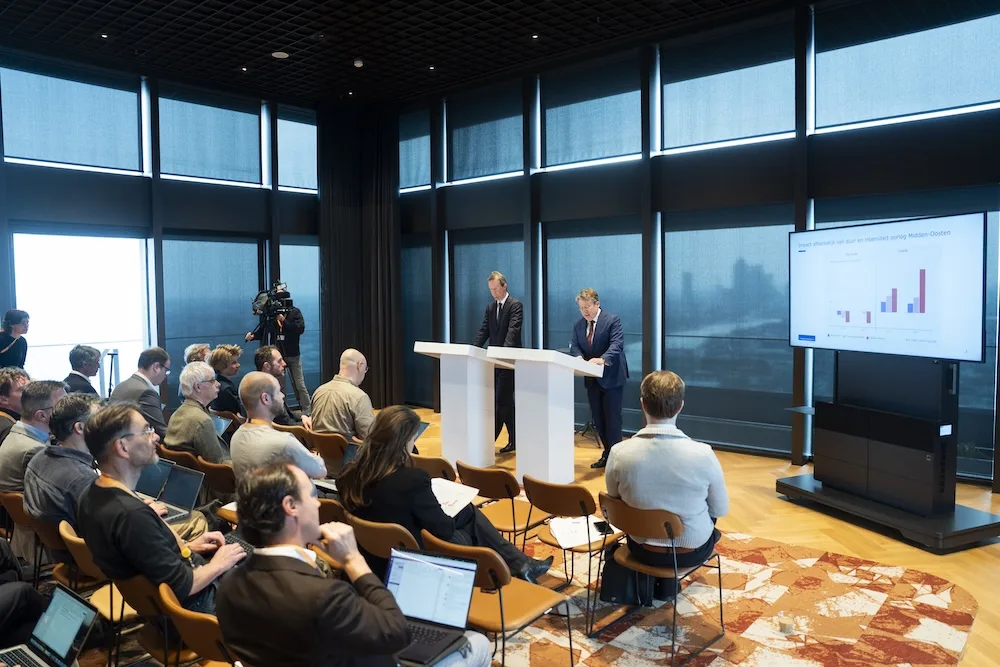
During the presentation of the outlook and the bank’s annual report, central bank president Olaf Sleijpen spoke out against generic measures to keep energy more affordable at the current time.
“Of course people are talking about compensation for the rise in energy prices and I completely understand it,” he said. “But at the same time, I think it sensible to wait what the impact will be on households before deciding to go for compensation.”
“Cutting fuel taxes by 10 cents is not going to make people happy,” he said. “And people like me don’t need it. If you do plan to cut bills, then make sure the help reaches those who really need it.”
Politicians have been calling on the government to take more action to head off soaring energy bills because of the war in the Middle East. However, people also need to realise that such measures are extremely expensive, Sleijpen said.