




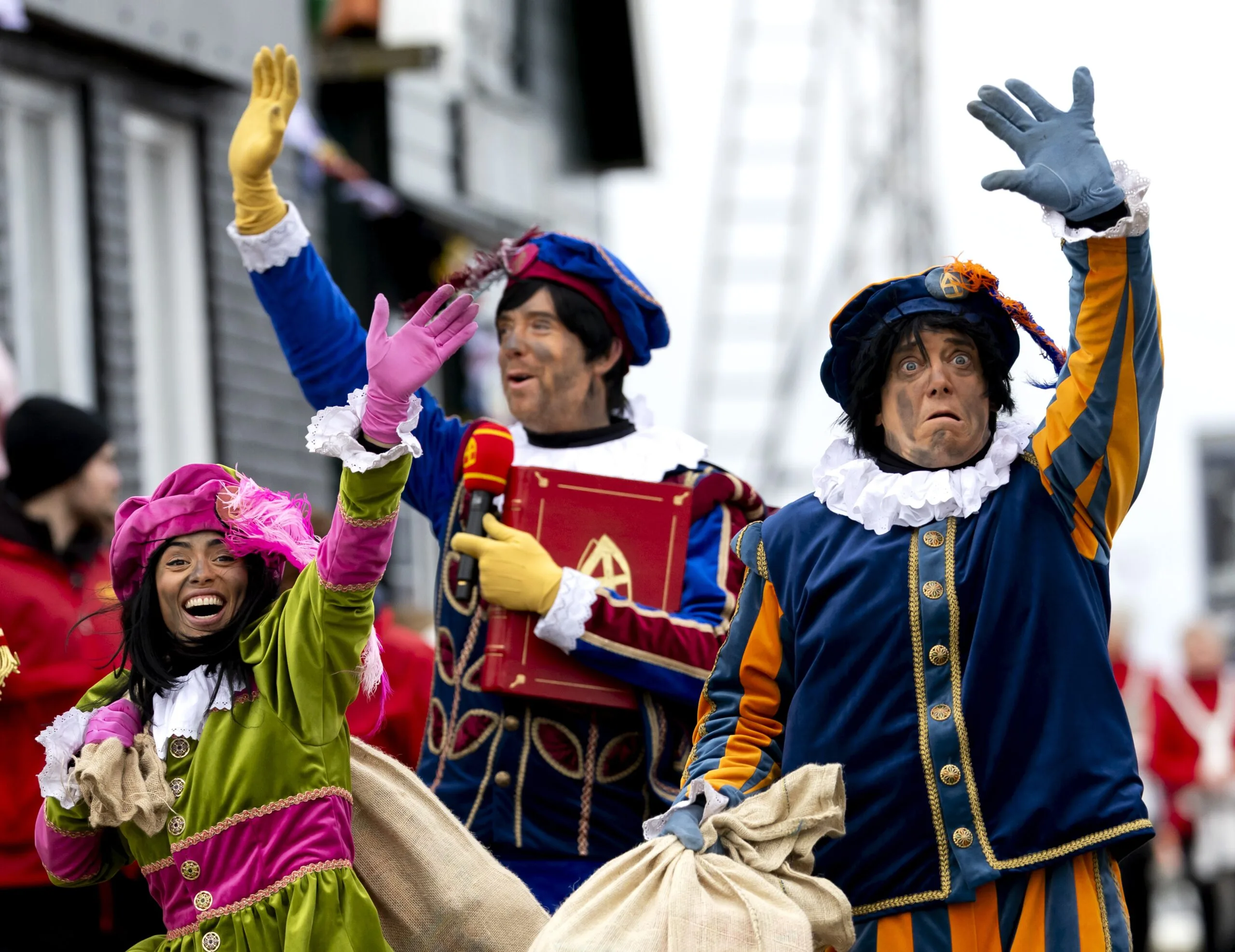
The children’s mock news show Sinterklaasjournaal has been awarded this year’s Machiavelli prize for outstanding communication on “the cutting edge of tradition and change”.
The jury said the programme had established itself in the last 25 years as an “annual benchmark that provides viewers of all ages, whether with or without children, with magic and talking points every day.”
Previous winners of the award include virologist Marion Koopmans and intensive care specialist Diederik Gommers during the coronavirus pandemic, investigative news bureau Bellingcat, former national men’s football team coach Bert van Marwijk and Queen Máxima.
The Sinterklaasjournaal runs for around three weeks leading up to December 5, when St Nicholas traditionally delivers presents to Dutch children by riding across the rooftops on his white horse and entering their houses by the chimney.
The nightly programme takes the form of a news show with updates on the progress of Sinterklaas, who according to legend arrives from Spain by steamer with his gang of helpers known as Pieten.
The 10-minute episodes are peppered with topical references: during the pandemic the Pieten held news conferences to announce new rules about the distribution of presents, echoing the government’s lockdown press conferences.
Death threats
The script changes every year, but the basic elements are always the same: Sinterklaas and his assistants face a series of setbacks and calamities that jeopardise the delivery of the presents, but the problems are always resolved in the nick of time, usually through the wise intervention of the saint.
Last year’s storyline sparked anger when the “head Piet” (Hoofdpiet), played by Niels van der Laan, said friends and relatives might have to take over the role of Sinterklaas during a national emergency.
Presenter Merel Westrik said Van der Laan had received several death threats after parents complained on social media that the storyline had spoiled the tradition for children.
In the last decade the programme has also had to respond to the controversy around the blackface character Zwarte Piet, treading a delicate line between traditionalists who were resistant to any change and organisations such as Kick Out Zwarte Piet, which denounced it as a racist caricature.
While activists on both sides of the debate clashed at the Sinterklaas arrival parades in November, the programme makers opted to let the tradition evolve, gradually replacing blackface Piets with sooty-faced versions between 2014 and 2019.